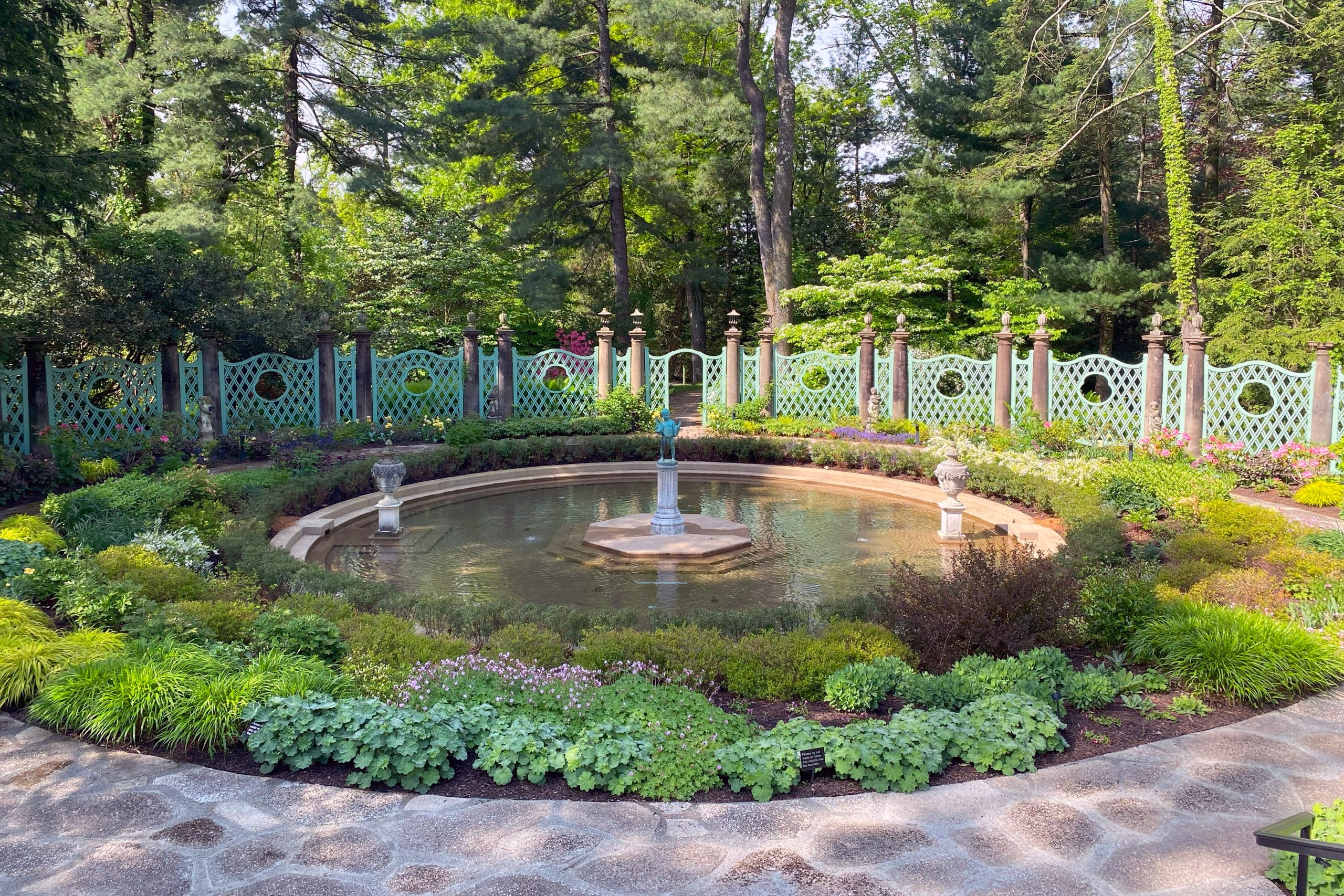
A Historic and Divine Garden Space

The termination of Greenwood’s South Axis offers a serene vista for all who gaze upon its unique beauty: the Garden of the Gods (originally named the Garden of the Zodiac). Framed by historic trellises and centered with a charming fountain, this picturesque garden area causes one to pause and ponder its rich layers of history.
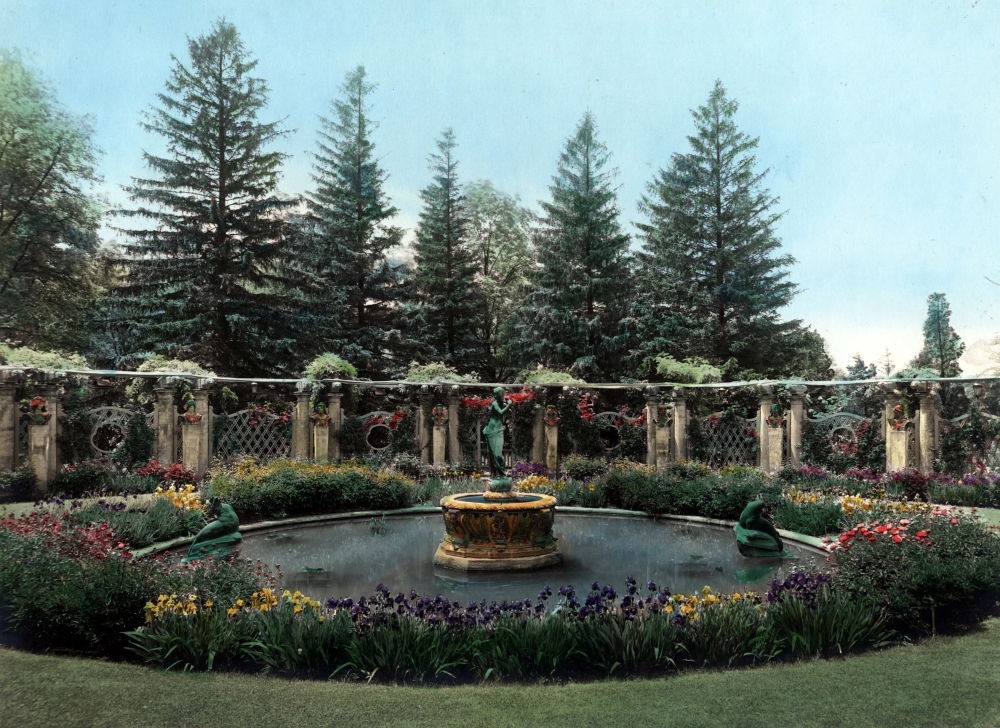
Garden of the Zodiac, Circa 1920s

Dating to the Day period, this Italianate water garden is believed to have been designed and completed in 1918 by architect William Whetten Renwick. Exemplifying Renwick’s early twentieth-century approach to garden design, the space featured a graceful semicircular pergola, echoing the design of one found in Renwick’s neighboring garden, and was draped in luxuriant climbing vines that shimmered in the sunlight. Classically inspired Rookwood busts of Roman divinities were placed between columns, while openwork cross-hatched trellis panels alternated with trellises that had oriel openings, offering a carefully composed glimpse into the feathery evergreens beyond the garden.

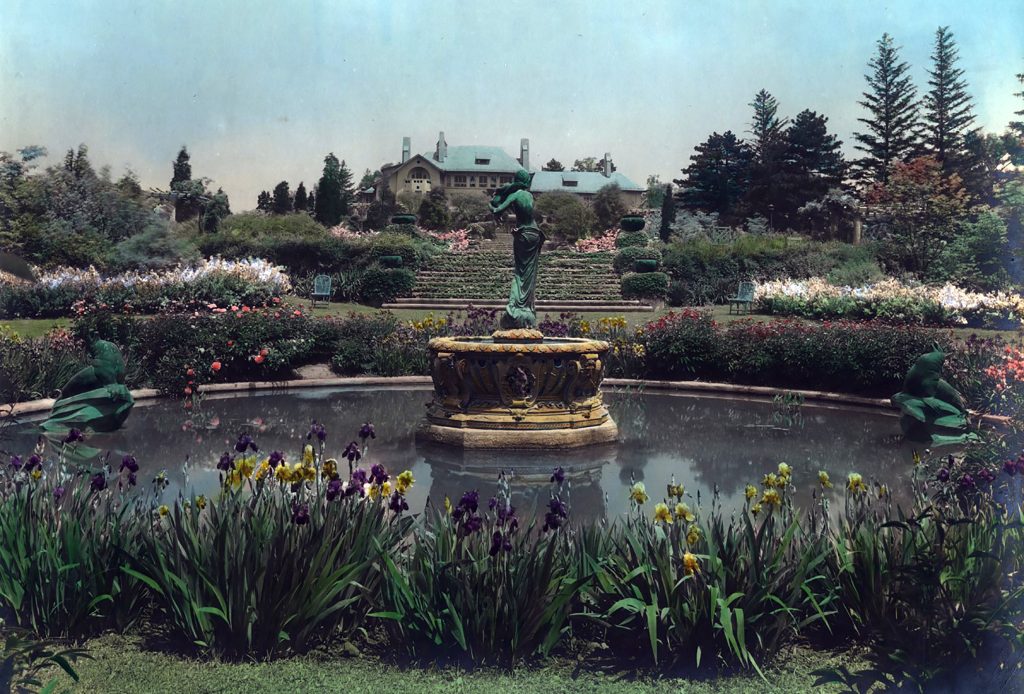
Garden of the Zodiac view toward the Day mansion, circa 1920s

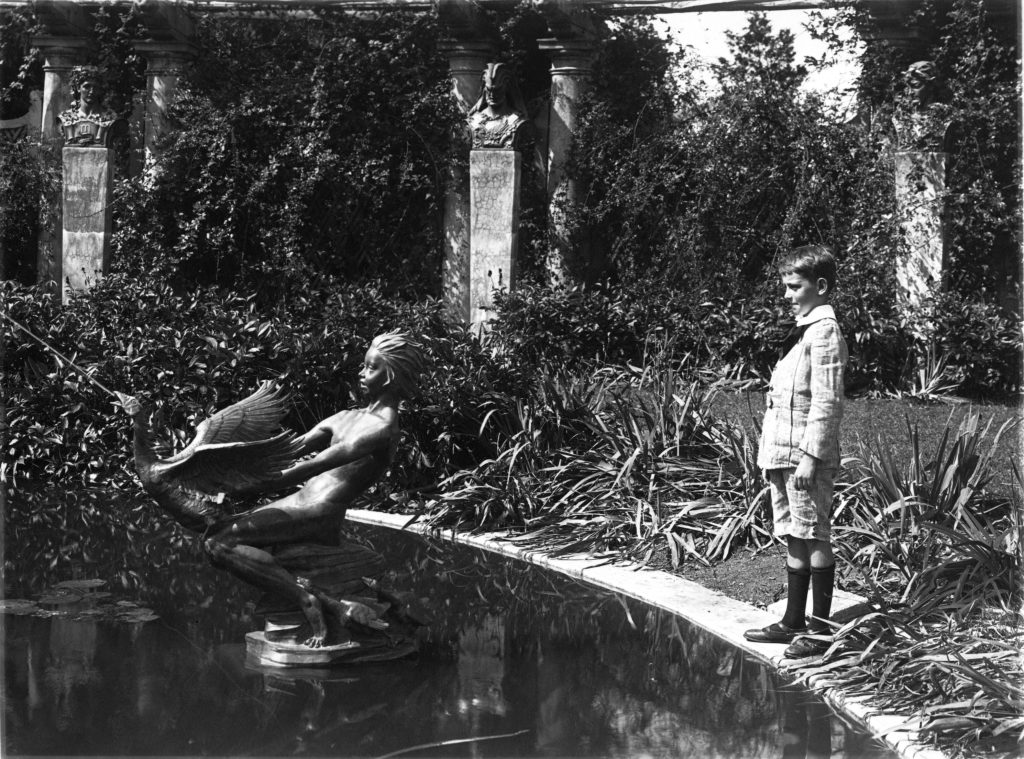
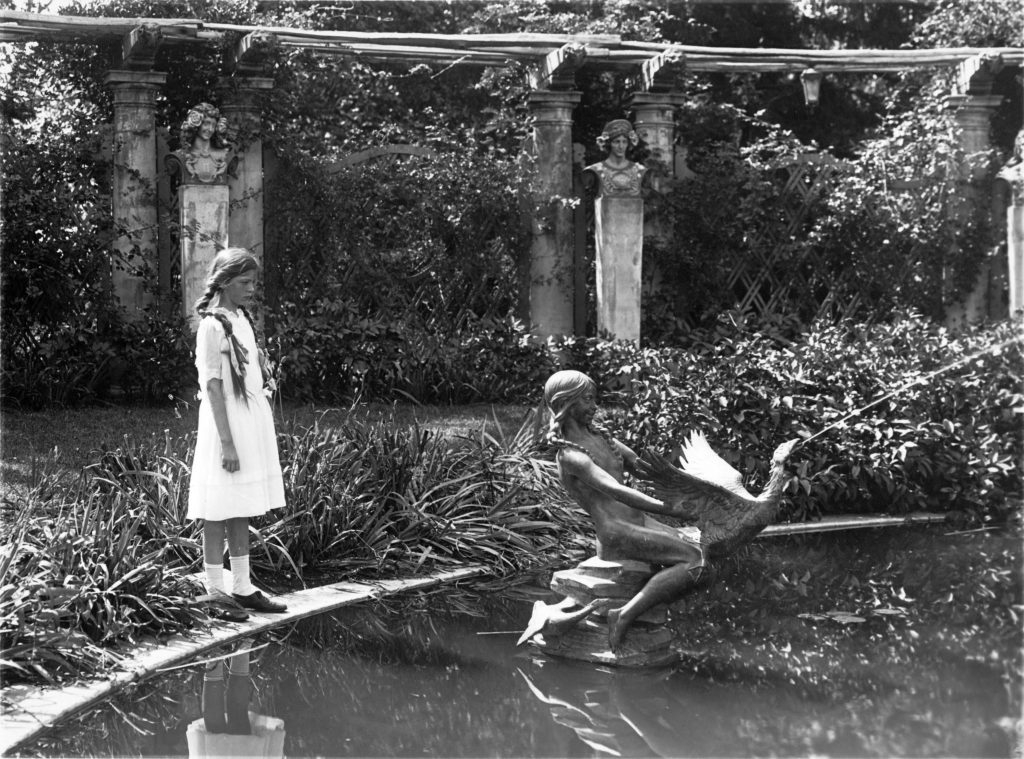
At the heart of the garden stood a circular reflecting pool encircled by low plantings of iris and peonies. Rising from its center was a life-sized bronze figure of Pauline Day portrayed as Venus, her gaze directed toward the Day mansion perched atop the hill. Created by Renwick Studios, the figure rested upon an elaborate Italian Renaissance-inspired base, again reminiscent of one found in Renwick’s own courtyard. Flanking the pool were two bronze fountains by sculptor Emilio Angela, who served as Renwick’s assistant while residing on the Day estate as an artist-in-residence. Goose Boy, modeled by Fairfield Day, and Goose Girl, modeled by Laura Day, lent a sense of whimsy and vitality to the garden’s classical composition.

Pauline Day and Renwick Studios’ “Venus” bronze sculpture, circa 1920s

Fairfield Day and Emilio Angela’s “Goose Boy” bronze fountain, circa 1920s

Emilia Day and Emilio Angela’s “Goose Girl” bronze fountain, circa 1920s

In December 1949, Peter J. Blanchard Jr. acquired a portion of the former Day estate, and along with his wife, Dr. Adelaide Childs Frick Blanchard, brought renewed vision to Greenwood’s gardens. Finding the Garden of the Gods overgrown and neglected, Blanchard restored its elegance by repairing the trelliswork, clearing the concrete pathways, and framing the space with boxwood. With few of the original Day-era sculptures remaining, he reinstalled Emilio Angela’s Boy with Waterfowl to serve as the focal point for the Garden of the Gods, relocating it from its earlier setting near the Teahouse.

Blanchard era Garden of the Gods, circa 1960s

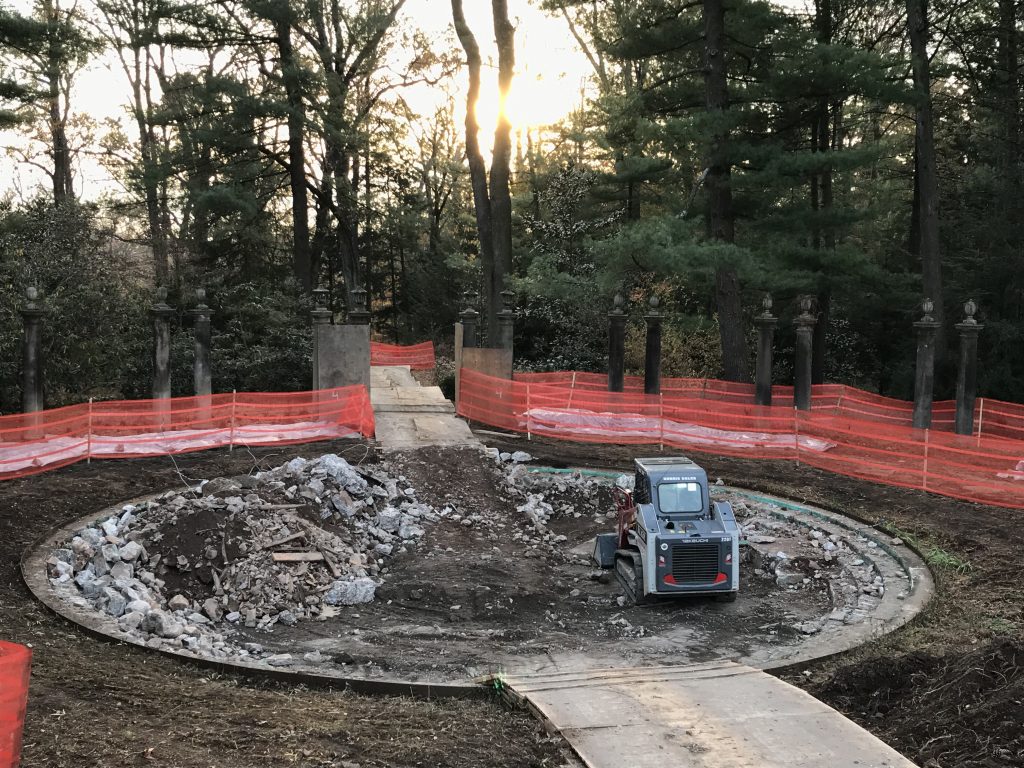
From 2019 into 2020, as part of the ambitious restoration of Greenwood’s Main Axis, and in collaboration with architect Allan Summers and his team at Robinson Anderson Summers Landscape Architects, the original Garden of the Gods was carefully recreated with new concrete, the reinstallation of a functional fountain, and new plantings.

Garden of the Gods construction, circa 2020

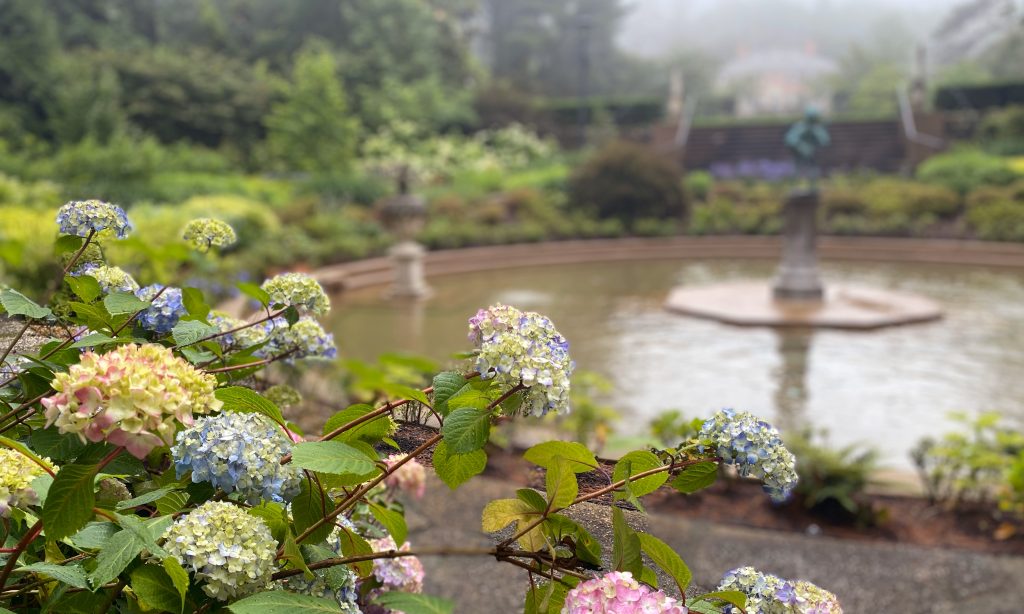
Today, Greenwood’s more than twenty-eight acres of gardens, grounds, and architectural features continue to embody the defining design ideals of the twentieth century, and the Garden of the Gods remains among its most evocative spaces. Through the harmonious interplay of architecture, sculpture, and horticulture, this extraordinary landscape honors its storied past, while continuing to inspire all who wander its paths.

Garden of the Gods, circa 2025