A Walk Through Time

Over the past century, the Teahouse Walk has been shaped by the vision and care of Greenwood’s former stewards, the Day and Blanchard families. This historic walkway endures today as a testament to their foresight and creativity.

Dating to around 1920, the rustic Teahouse Walk was originally designed by William Whetten Renwick for Joseph P. Day. Cut into the hillside parallel to the South Axis, this narrow path extended from the base of the Cascade, past the Teahouse, and onward to the Summerhouse. Renwick also created concrete urns which were displayed on the Teahouse Walk along with oriental-inspired lanterns.

The Teahouse Walk’s surface, formed of exposed aggregate concrete, offered an economical means of emulating the stonework of Italian Renaissance-style gardens in the early twentieth century. The irregular shape of the pavers also provided a simple counterpoint to the more formal Roman-inspired concrete paths around the Day mansion terraces and North Pergola.
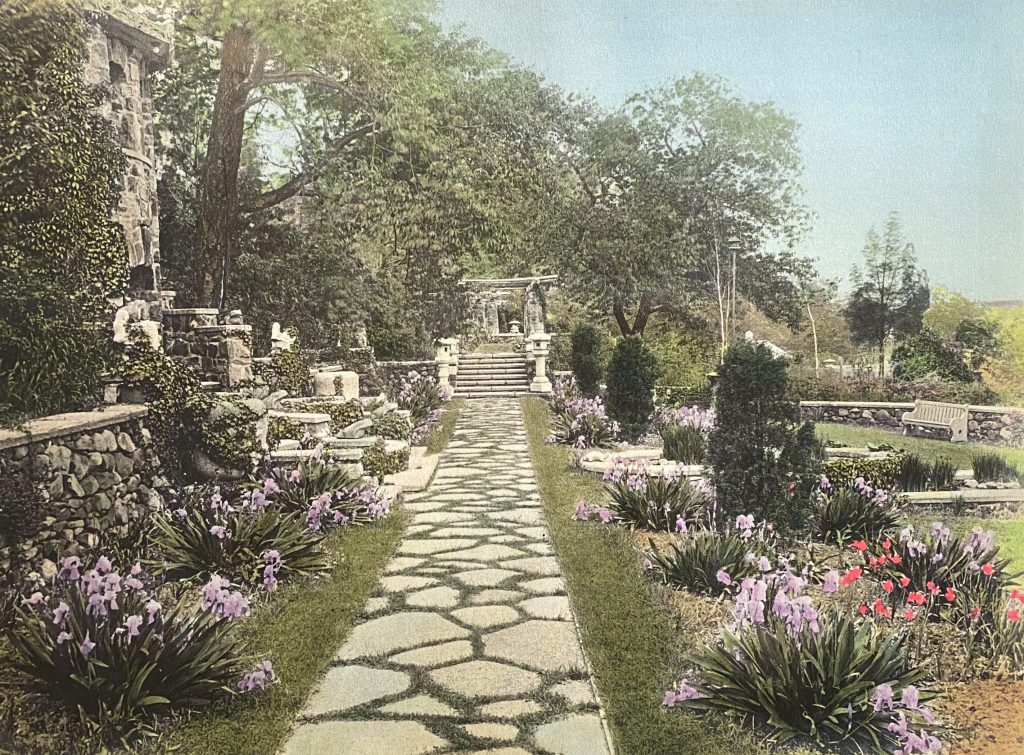
The Teahouse Walk in front of the two-story Teahouse, with exposed aggregate concrete path, circa 1924.

Two grape arbors framed portions of the walk: a long arbor stretching between the Cascade steps and the Teahouse Terrace, and a shorter counterpoint extending toward the Summerhouse at the end of the axis. Unlike the stucco arbors found on the house terraces, the Tennis Loggia, and the Garden of the Gods, the structures were grounded in the landscape, their piers constructed of local stone and set atop a low stone retaining wall.

A long Grape Arbor with stone piers shaded the Teahouse Walk from the Cascade steps to the Teahouse Terrace, circa 1924.

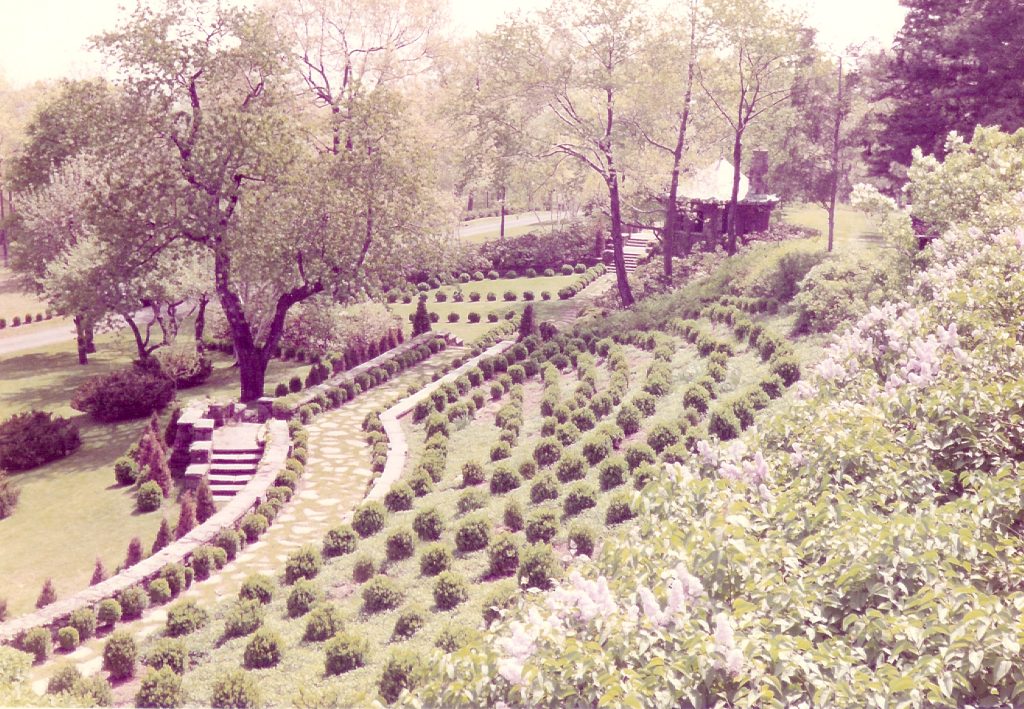
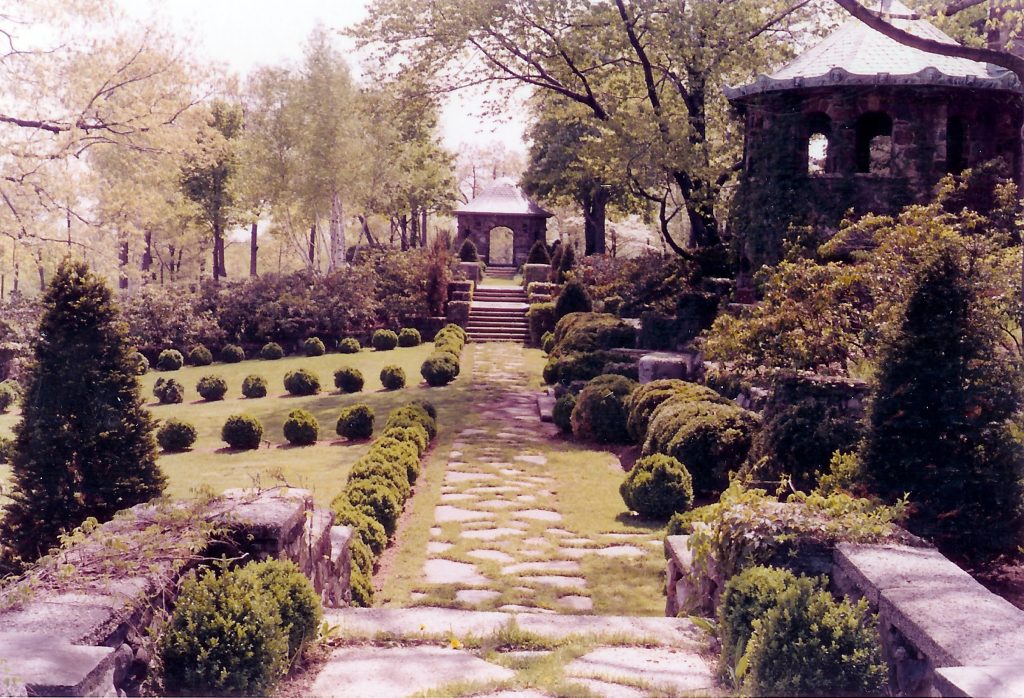
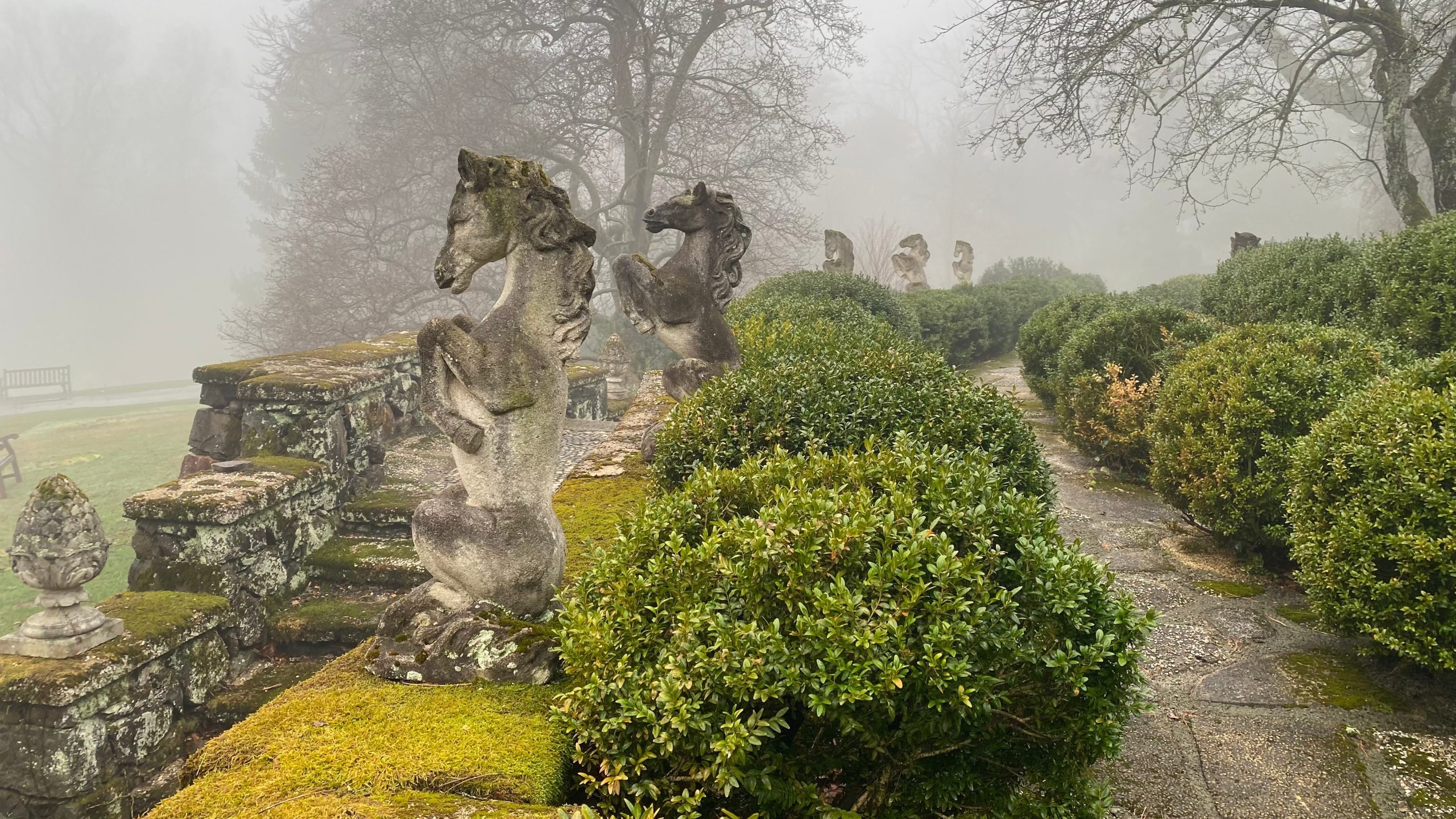
In the mid-1950s, and with an eye toward introducing an element of European-inspired formalism, Peter P. Blanchard Jr. removed the grape arbors and introduced rows of boxwood along the inner edge and across the embankment between the Teahouse Walk and the South Axial gardens. He refurbished the exposed aggregate pathways, and added limestone chess figures along the horseshoe steps of the Teahouse and the length of the walk, many of which still lend whimsical character to the same area today.

Teahouse Walk after the Grape Arbors were dismantled, circa 1959.

Peter Blanchard preserved the stone retaining wall and seating alcoves near the Teahouse Terrace, while removing the water garden. A polyhedral astrological sundial, once in situ at Adelaide Childs Frick Blanchard’s childhood home Clayton, on Long Island, was also installed along the walk connecting the Teahouse and Summerhouse.

The Teahouse Walk in front of the two-story Teahouse, with exposed aggregate concrete path, circa 1959.

Originally created by William Renwick as a rustic passage through the Days’ Renaissance-style gardens, the Teahouse Walk was later refined through Peter Blanchard’s passion for the grand formal gardens of seventeenth- and eighteenth-century France. Today, the result of their vision is an enchanting and timeless example of a century of garden design.

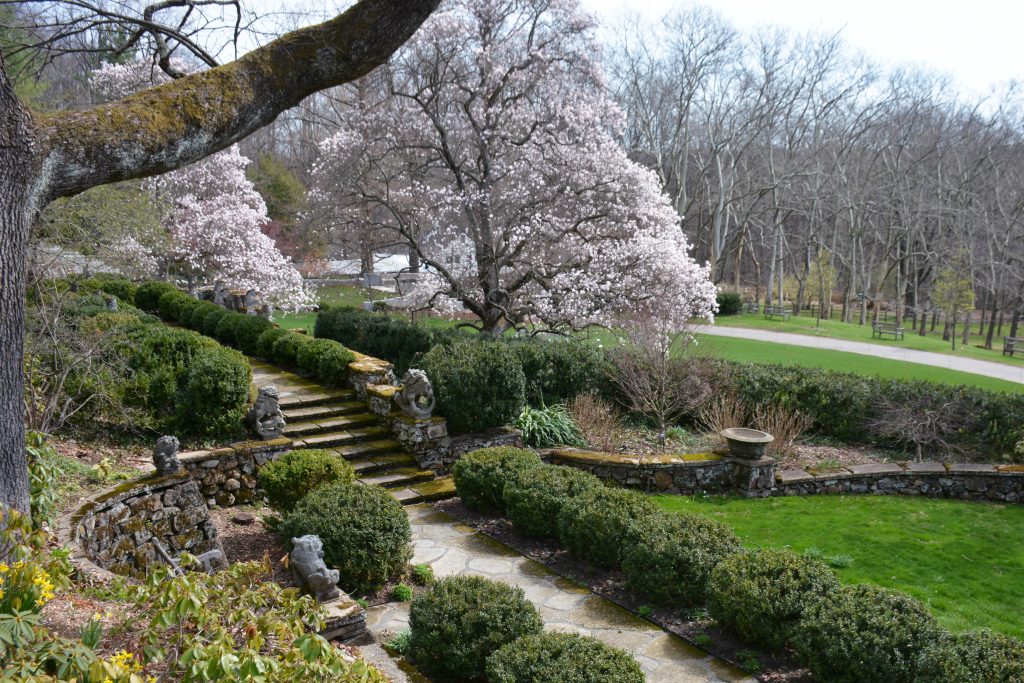
A spring Teahouse Walk view from the second story of the Teahouse, circa 2026.

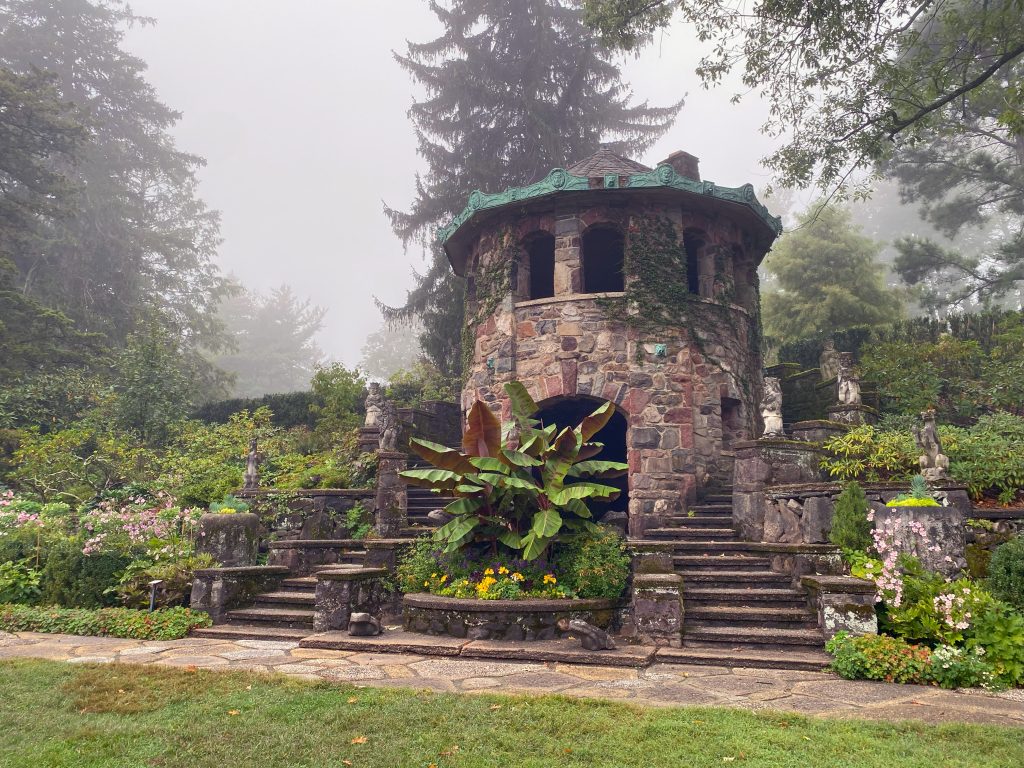
A view of the Teahouse and Teahouse Walk on a foggy summer day, circa 2025.

An autumn Teahouse Walk view toward the Summerhouse, circa 2024.