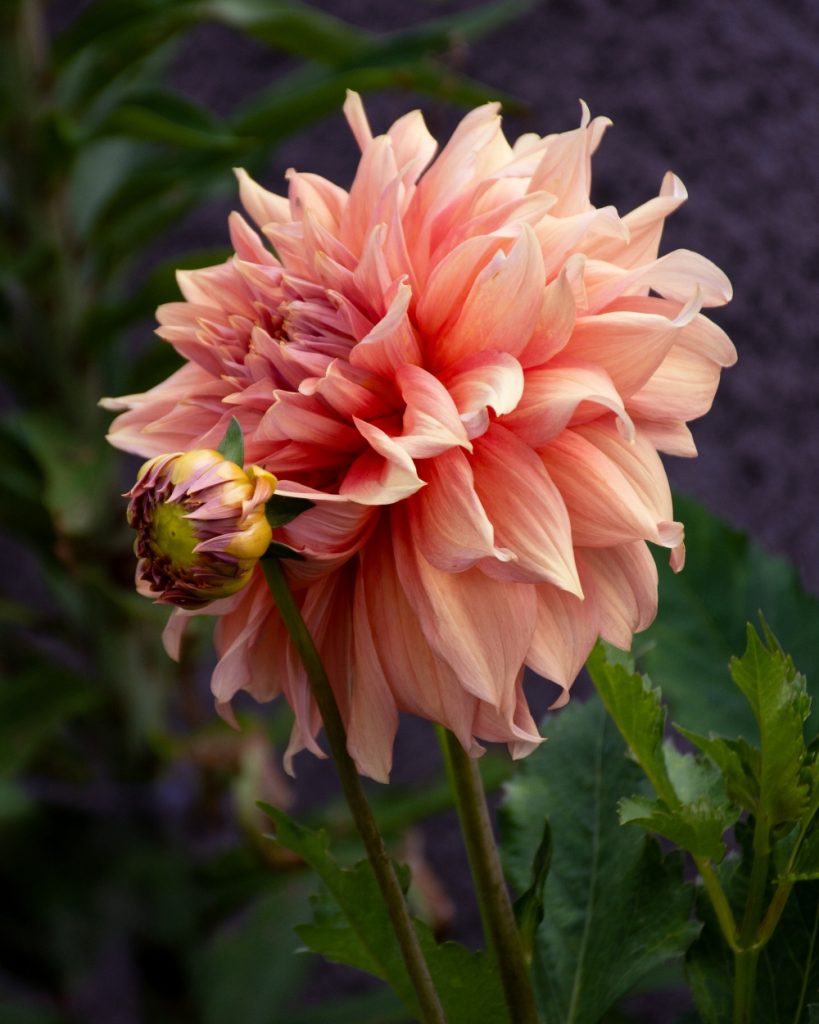
Dazzling Dahlias

There are flowers that announce themselves quietly at Greenwood, and then there are dahlias. On the Main Lawn and Reflecting Pool Terrace, they unfurl and bloom with such geometric precision that they almost seem sculpted by an artist’s hand, their layers of vibrant petals spiraling inward with mesmerizing symmetry.

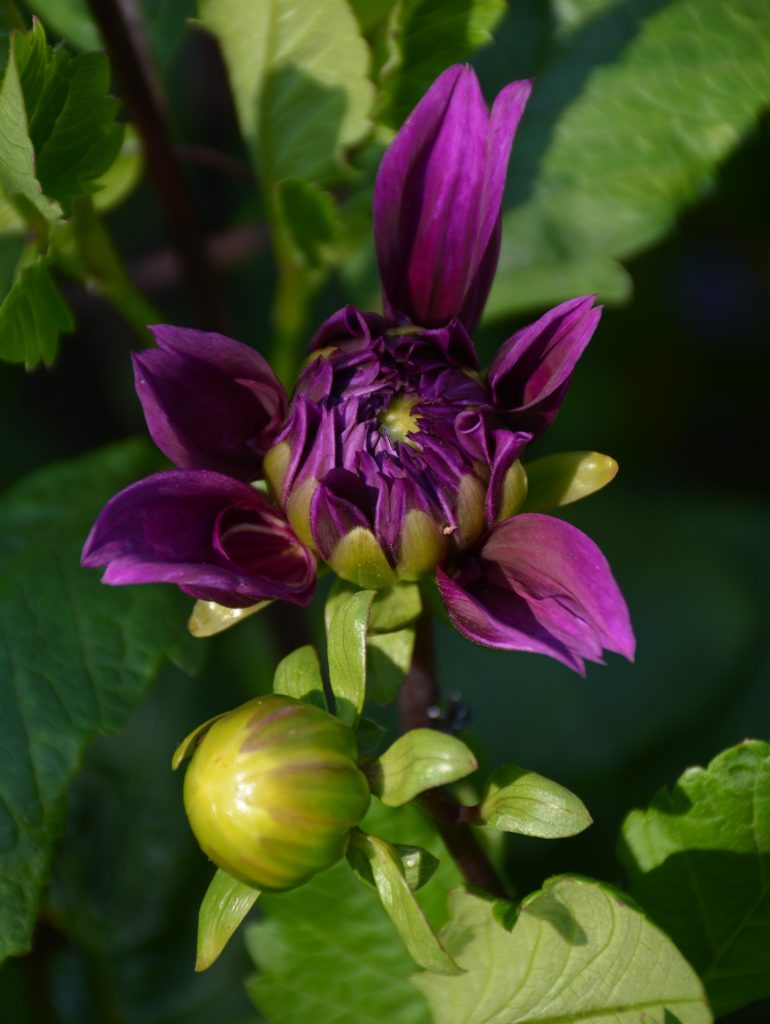
Dahlia ‘Thomas Edison’ begins to bloom by the Main Lawns

Long before these herbaceous perennials adorned our landscape or won ribbons at flower shows, they grew wild in the mountainous regions of Mexico and Central America. Cultivated by the Aztecs, dahlias were valued not only for their beauty, but also for practical uses such as a food source and traditional remedies to treat insect bites and inflammation.

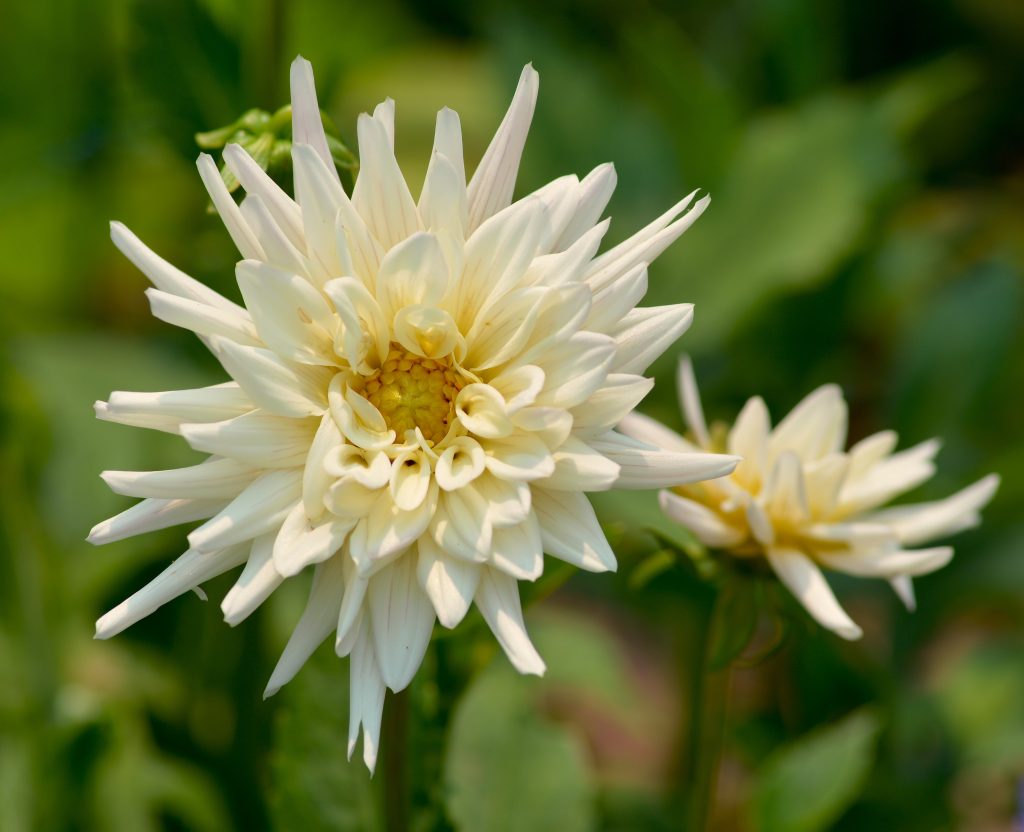
Dahlia ‘Playa Blanca’ bloom in the Reflecting Pool Terrace Beds

Spanish physician Francisco Hernández encountered and documented dahlias in Mexico in 1570, and in 1789, their seeds were formally sent from the Botanical Garden of Mexico City to the Royal Botanic Gardens in Madrid. Soon after, Spanish botanist Antonio José Cavanilles successfully grew them in Europe for the first time and named the genus Dahlia. In the late eighteenth century, their seeds were distributed throughout Europe, where the flowers quickly captured the attention of horticulturists and graced Victorian gardens. Because dahlias hybridize so readily, entirely new forms emerged within a few decades, and by the early 1800s, there were hundreds of varieties.

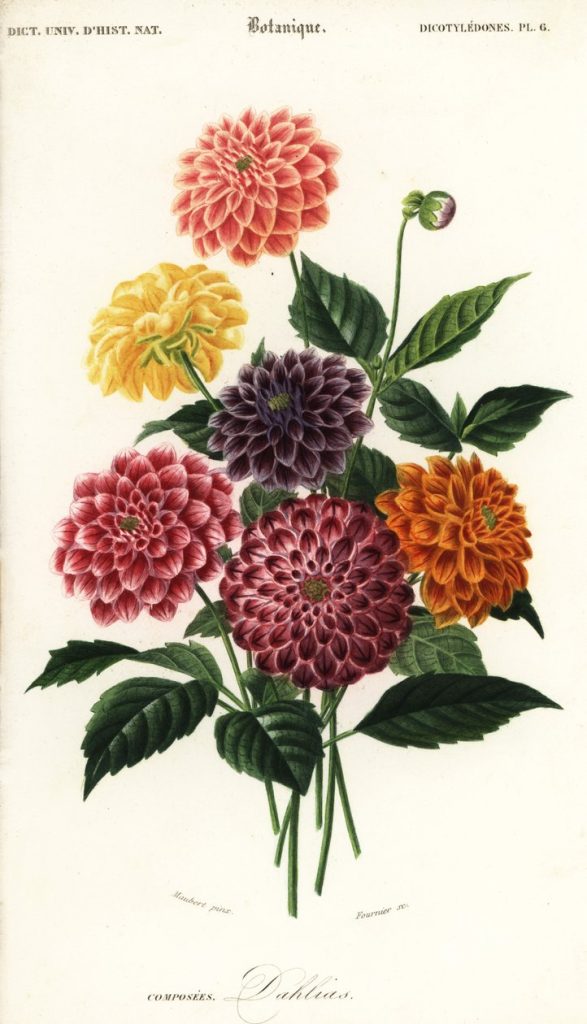
Reproduction of “Varieties of Garden Dahlias, Dahlia Pinnata,” by French botanical illustrator Louis Joseph Edouard Maubert (1806-1879), and published in “Dictionnaire Universel d’Histoire Naturelle,” 1849. Illustration is in the public domain.

Today, there are tens of thousands of cultivars worldwide, each classified by flower form, alongside several novelty and stellar types. Found in nearly every color imaginable, their blooms range in size from small, delicate, and star-like, to immense and nearly a foot across. One delightful historical connection to our state is that the Waterlily form, one of today’s most elegant classifications, was first recognized in 1890 in a rural New Jersey field by a grower, Lawrence K. Peacock. He officially introduced it to the public as a Nymphaea (the scientific name for water lilies) dahlia in 1893, giving the Garden State a small but meaningful place in dahlia history.

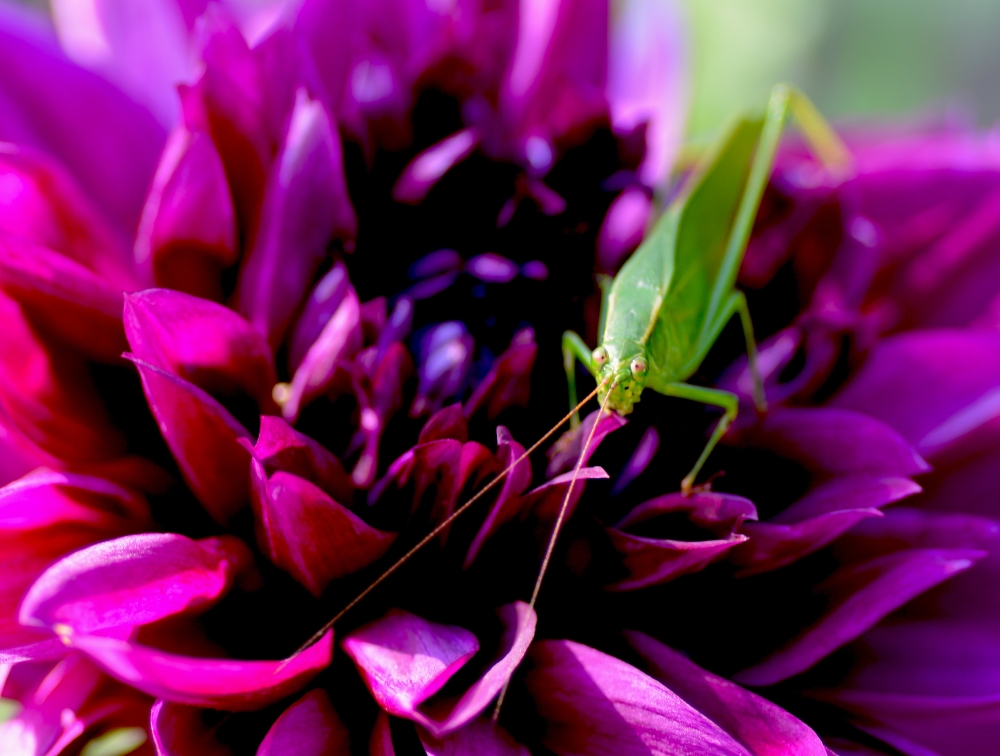
The striking emerald green of a katydid highlights the rich, velvet textures of Dahlia ‘Thomas Edison’

Symbolizing elegance, creativity, generosity, and devotion, dahlias are a perfect fit for the summer gardens of Greenwood, and a place where they will continue to thrive and delight until autumn’s first frost.

Image above and at top: Dahlia ‘Fairway Spur’