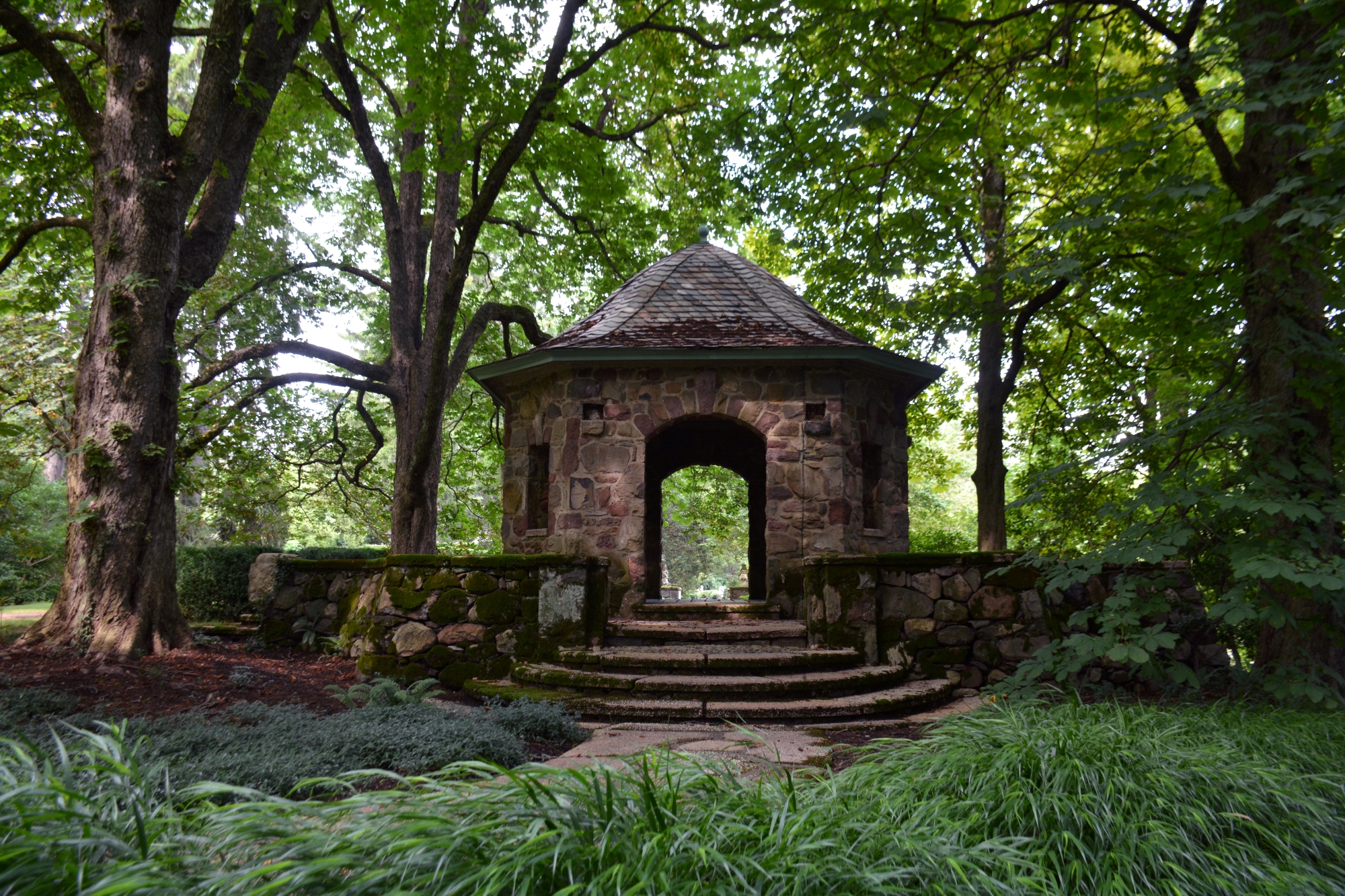
The Rustic Simplicity of the Summerhouse

An exquisite addition to Joseph P. Day’s estate, the Summerhouse was designed and built in the early 1920s by visionary architect William Whetten Renwick as a respite from hot and humid weather. This octagonal pavilion, crafted from local sandstone and capped with cone-shaped roofs edged in copper, emulates the rustic beauty of Italian Renaissance gardens while embodying the quiet simplicity of the Arts and Crafts Movement.

Inside its timeless walls, the floors are adorned with exquisite Fulper tiles in lustrous hues of orange, green, and blue. Arranged in precise geometric patterns at the height of Fulper’s acclaim in the 1920s, the tiles have withstood nearly a century of seasonal change at Greenwood — a testament to both their craftsmanship and durability. Also present in the interior during the Day period was working electricity, which illuminated a light fixture on the ceiling, adding another dimension to the usefulness of this structure.


Fulper tiles accentuate the floor of the Summerhouse

Planted just outside the Summerhouse by Renwick and still thriving today are four horse chestnut trees (Aesculus hippocastanum). Strategically placed at each of the Summerhouse’s four windows and visible from inside the pavilion, they provide shade and verdant views of their seasonal May blooms. Renwick also had the foresight to curve the shape of the walls surrounding the Summerhouse to allow for the growth of these magnificent trees.

Horse chestnut trees bloom by the Summerhouse in May

Renwick is believed to have drawn inspiration for the Summerhouse from vernacular garden houses and belvederes built during the Arts and Crafts era in Britain and later in America. The movement, which flourished from the 1880s to 1914, was rooted in simplicity of design, joy in manual labor, and the use of regional materials. Two influential English books, Small Country Houses of To-Day (1910) and Gardens for Small Country Houses (1912), illustrate examples similar in style to the Summerhouse and another of Greenwood’s stone follies, the Teahouse. These books, widely known among American architects of the period, showcased garden structures closely aligned with Renwick’s vision for the Day estate.

The enchanting exterior of the Summerhouse in autumn

More than a century after its completion, the Summerhouse remains a serene oasis, offering shade and beautiful views to all who stroll the gardens of Greenwood.